
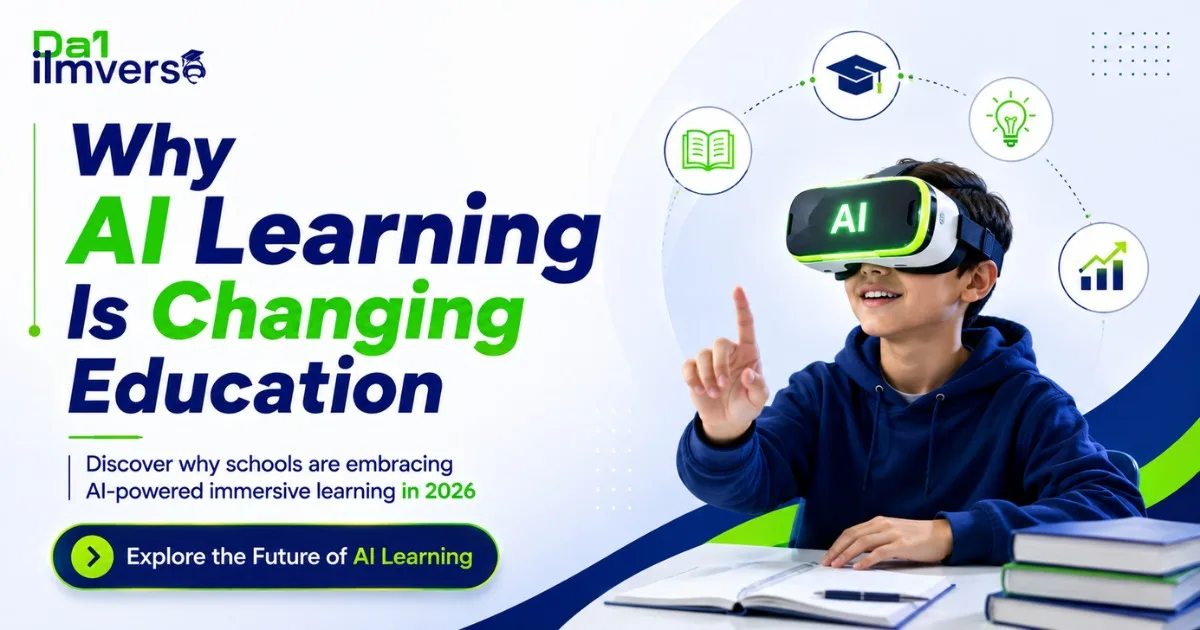
Think back to how you learned physics, history, or coding. A teacher stood at the front of a crowded classroom, writing on a board or clicking through static slides. You copied notes. You memorized formulas. And within days after the exam, most of it faded away. Now compare that with what is happening in education in 2026. A student puts on a lightweight VR headset and suddenly finds themselves standing on the Moon. They jump and instantly experience lunar gravity in real time.
For over a century, education has changed very little, but students have changed completely. Today's learners grow up in interactive digital environments, yet are still taught using passive, outdated methods, creating a growing gap between how students learn and how schools teach.
AI-powered immersive learning combines artificial intelligence with interactive 3D environments to completely transform how students understand concepts. Instead of reading or memorizing information, students experience it. AI continuously analyzes student behavior, learning speed, and mistakes, adapting lessons in real time.
Modern education leaders are no longer satisfied with basic online classes or digital worksheets. They are shifting toward full learning ecosystems that combine teaching, simulation, and automation with Personalized Learning at Scale, Immersive 3D Classrooms, Virtual Campuses, and Intelligent School Automation.
Human memory is not designed for passive reading. It is built for experience. When students actively interact with concepts, their brain engages multiple cognitive systems: visual, spatial, and motor memory. This is the same reason pilots train in flight simulators, surgeons practice operations in VR environments, and engineers use 3D simulations before real-world execution.
There is a common fear that AI will replace educators. In reality, the opposite is happening. AI handles repetitive and time-consuming tasks such as grading assignments, tracking student progress, generating practice exercises, and managing administrative workflows. This allows teachers to focus on what truly matters: mentoring students, encouraging creativity, building critical thinking skills, and providing emotional guidance.
The future classroom is no longer limited to four walls or fixed time slots. It is a continuous learning ecosystem connecting students, teachers, and parents. Platforms like Da1ilmverse are already building this ecosystem by combining AI-powered learning, immersive environments, and intelligent school management into one platform.
The world students are entering is changing rapidly. Future careers will not reward memorization. They will reward adaptability, problem-solving, digital literacy, creativity, and critical thinking. Schools that adopt AI-powered immersive learning are not just upgrading technology. They are redesigning how learning itself happens.
The 45-minute lecture is no longer the center of education. Interactive, immersive, AI-driven learning experiences are replacing it, and the question is not whether this transformation will happen; it already is. The real question is whether education systems will lead this change or struggle to catch up. Because in 2026, learning is no longer about memorizing information. It is about experiencing it.
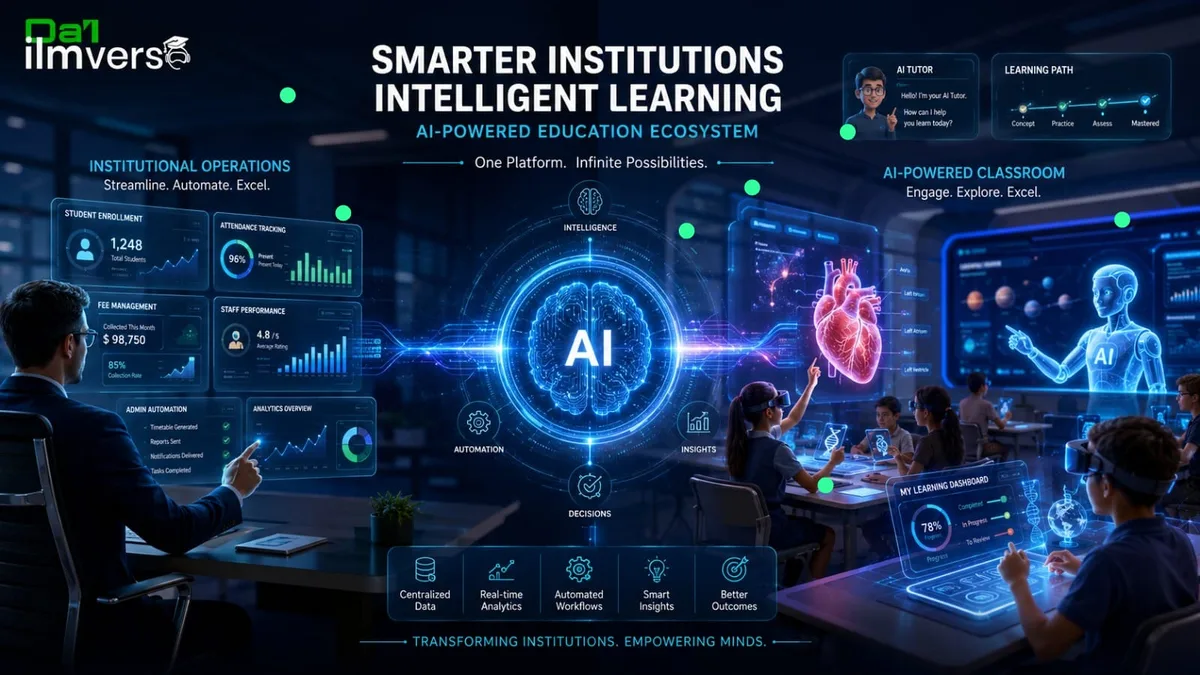
Most educational institutions do not suffer from a people problem; they suffer from a systems problem. Manual tracking, disconnected tools, and static classrooms constantly drain administrative productivity and student engagement. Today's digital-native students grow up in interactive, rich digital worlds, yet they are still being forced to learn in passive environments. To bridge this gap, modern institutions are upgrading to centralized, cloud-based configurations. Leading this global paradigm shift is Da1ilmverse, an advanced platform merging artificial intelligence and immersive technology to redefine institutional management and standard classroom learning.
Read More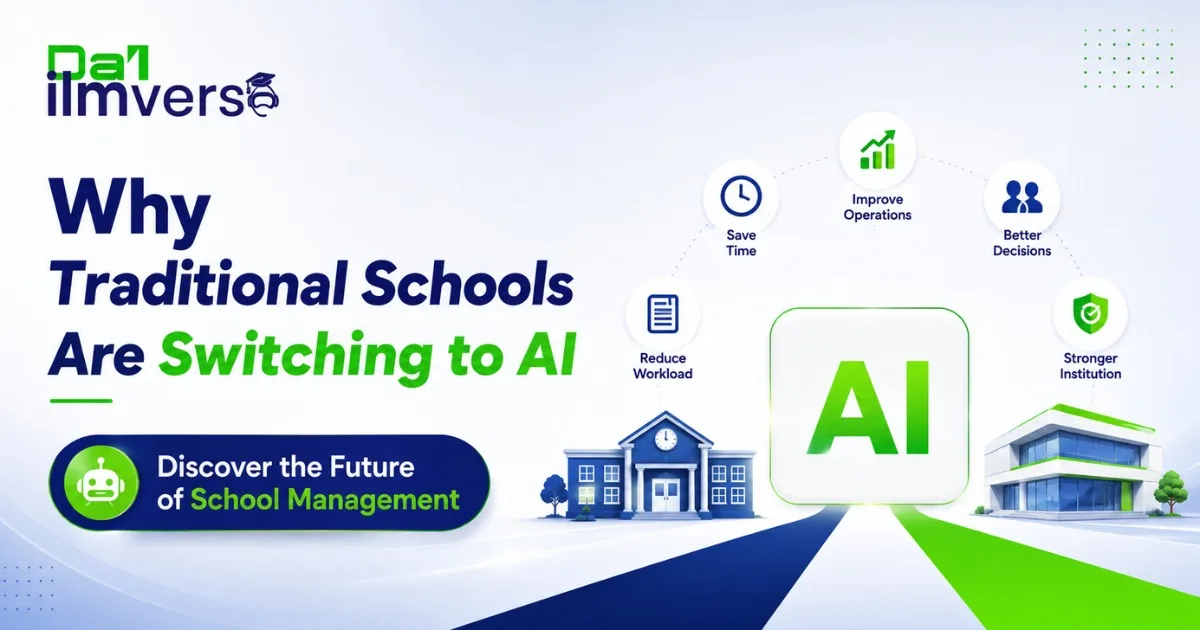
Is your school growing, or is it just getting busier? If your administrative "to-do" list is drowning out your academic vision, you aren't running a school; you're managing a paper trail. Managing a modern K-12 school, private college, or cross-city educational network requires navigating a relentless flow of daily tasks. School owners, principals, and institutional directors balance admissions, fee tracking, teacher schedules, and parent communication, which often leaves little room for academic growth.
Read More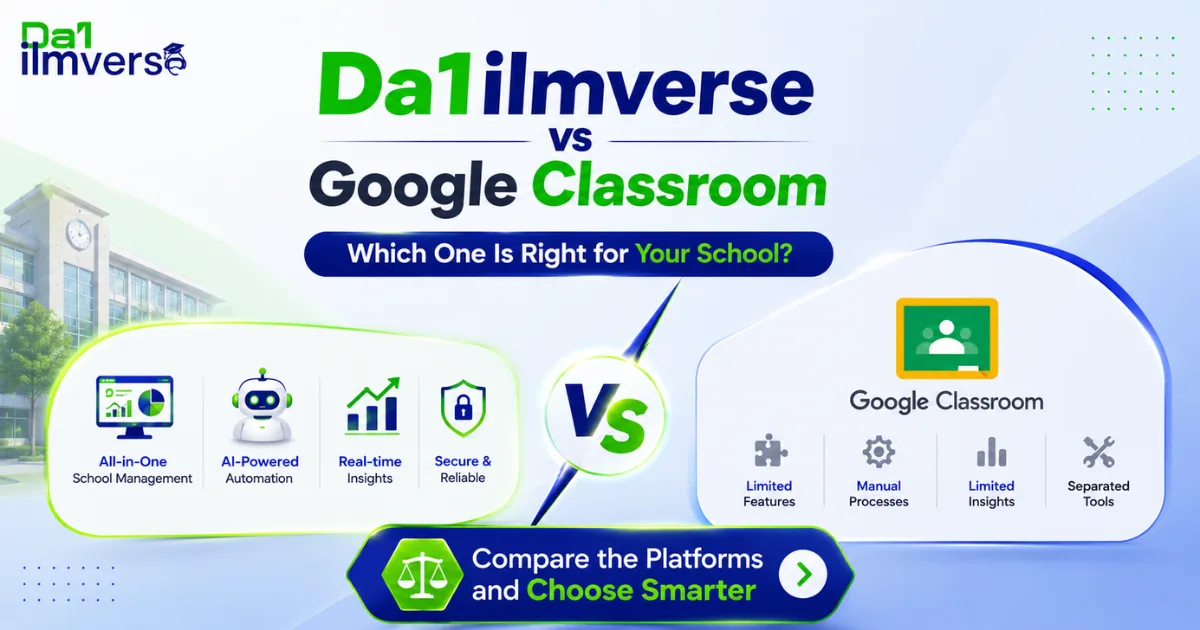
Managing a modern K-12 school with outdated tools is like trying to run a marathon in quicksand. School administrators and educators are drowning in a sea of disconnected Excel sheets, static PDF assignments, and manual timetable planning. While Google Classroom has long served as a reliable repository for digital documents, forward-thinking educational institutions are actively seeking Google Classroom alternatives that do more than just host files. They need systems that spark true student engagement and automate heavy administrative burdens. Enter Da1ilmverse, an all-in-one AI-driven and immersive 3D learning platform designed specifically to bridge the gap between static education and the interactive digital worlds where modern students live.
Read More